
Thai massage certificate
Earn Bright Moon’s 200-hour certificate in professional Thai massage. The New Mexico Massage Therapy Board (NMRLD) approved the program. The Institute is a registered massage therapy school, MT-2025-0186.
Bright Moon’s flagship intensive
200-hour Thai Massage, Yoga & AcroYoga Teacher Training
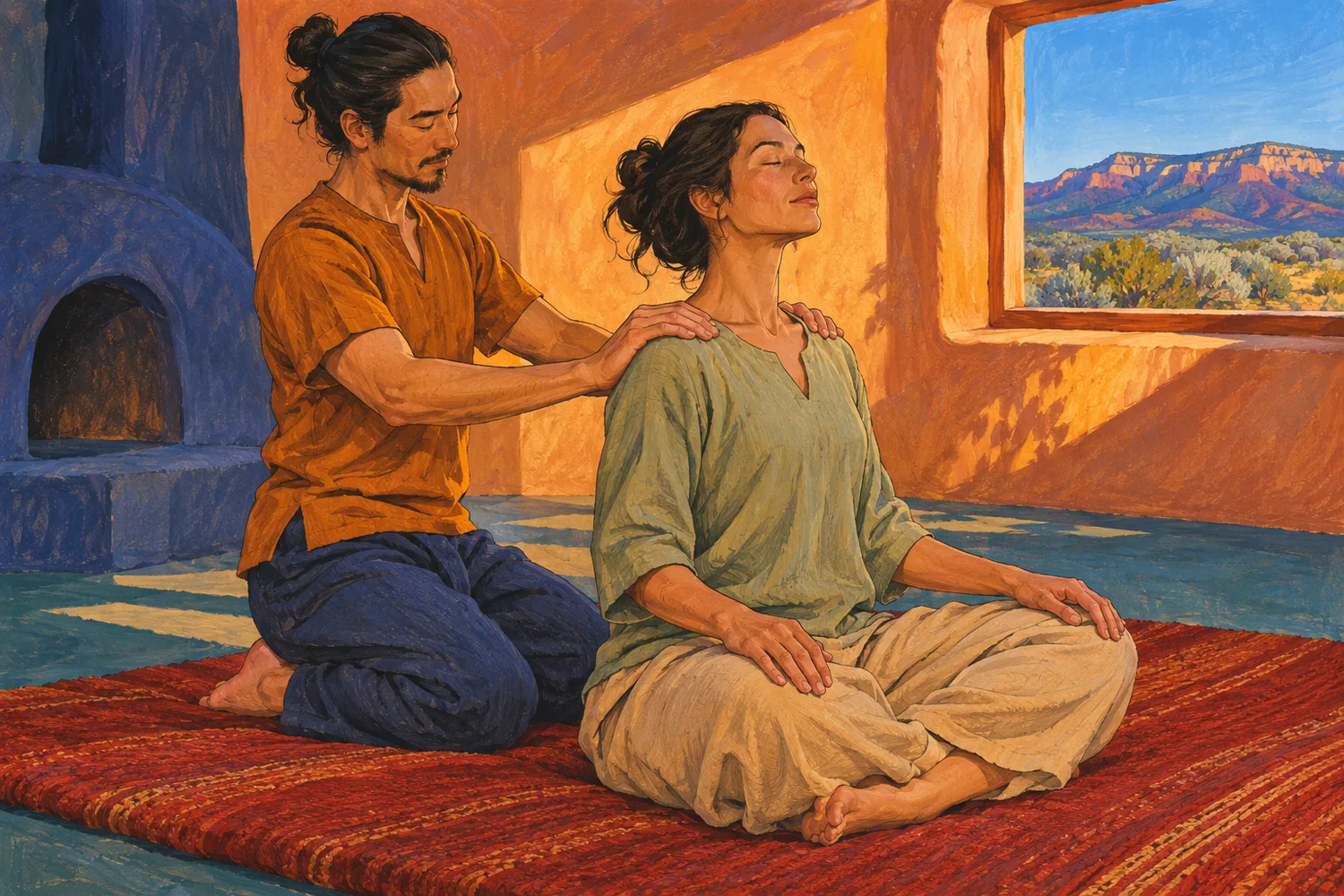
Bring your yoga practice to the massage mat. Learn to give a full Thai massage, then work with clients in Bright Moon’s supervised clinic.
Certifications
Enroll as a massage therapy student at The Bright Moon Institute and complete your yoga teacher training in the same 200 hours. Your completed coursework becomes part of your academic record.
Earn Bright Moon’s 200-hour certificate in professional Thai massage. The New Mexico Massage Therapy Board (NMRLD) approved the program. The Institute is a registered massage therapy school, MT-2025-0186.
Complete Bright Moon’s Yoga Alliance–approved 200-hour Registered Yoga School (RYS 200) training. Graduates can apply separately for individual RYT 200 registration.
Academic record
Bright Moon records the courses and hours you complete on your massage therapy transcript. The school can upload it to Parchment, where you can order an official copy and have it sent directly to a massage therapy board. Each board determines how it applies those hours toward its requirements.
Request an official transcriptPractice film · 2 min 21 sec
On a mat above Lake Atitlán, Ahna Ma shifts weight, listens through the hands, and follows a partner’s movement. Watch the rhythm of a session unfold in this silent archive film.
Ahna Ma’s practice archive · Lake Atitlán, Guatemala
Movement & bodywork
Begin with your own breath and balance. Carry that awareness into partner practice, onto the teaching floor, and into the touch you offer a client. Explore all six practices.
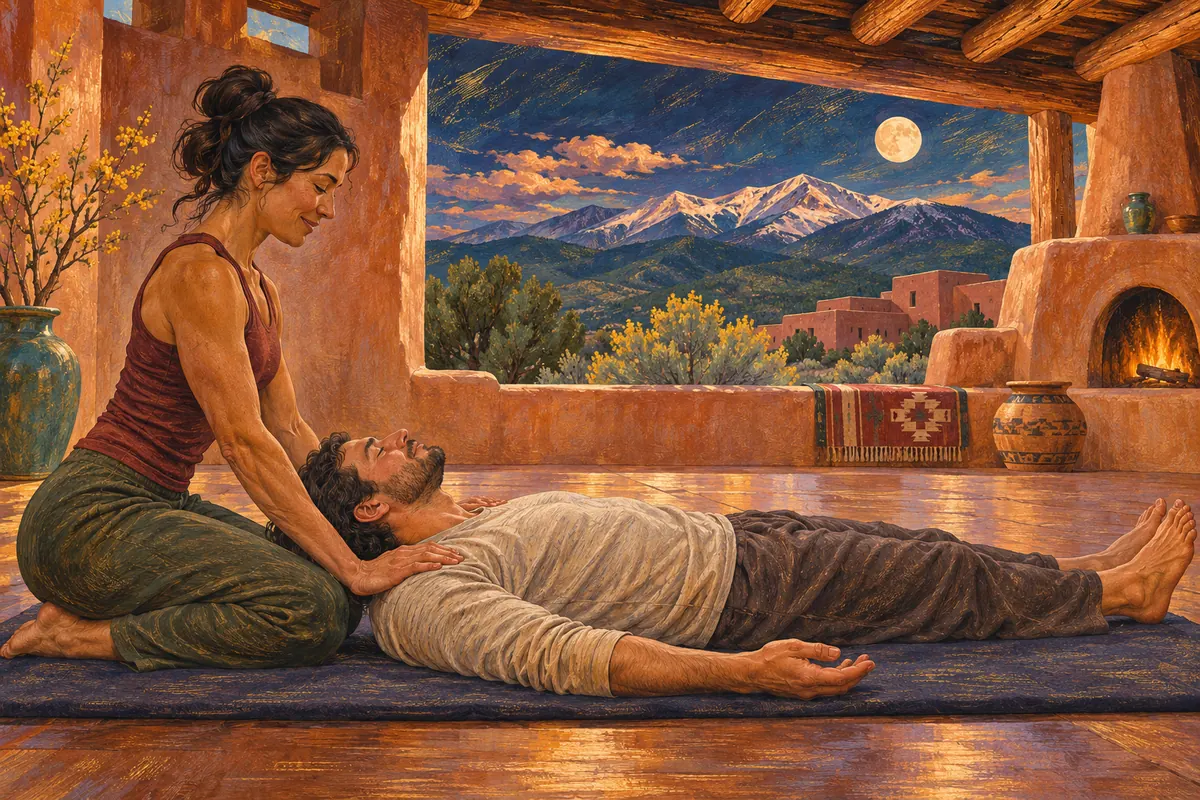
Work with a clothed partner on a mat. Practice rhythmic compression, rocking, and assisted stretches with your partner on their back, belly, side, and seated. Learn to change the sequence as the person responds.
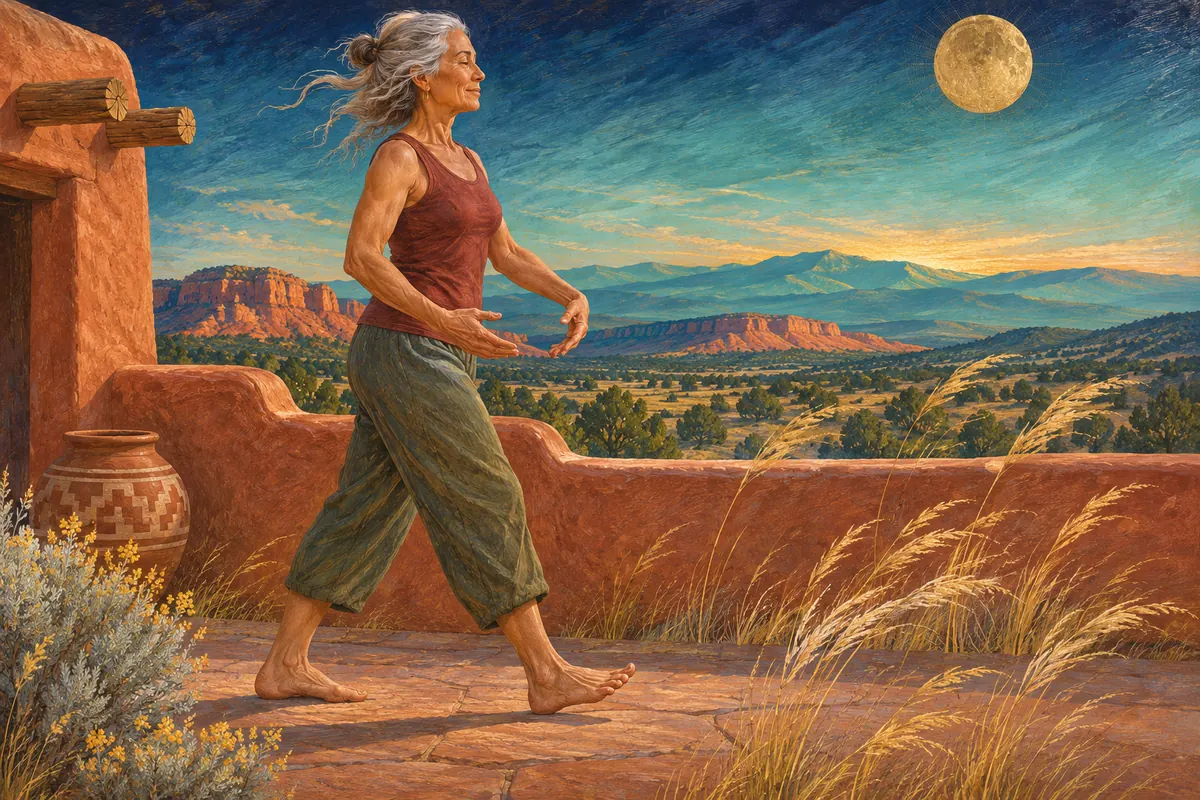
Follow the breath through a weight shift, a pause, and a change of direction. Returning to that awareness helps you notice where you brace and when a partner needs more time.
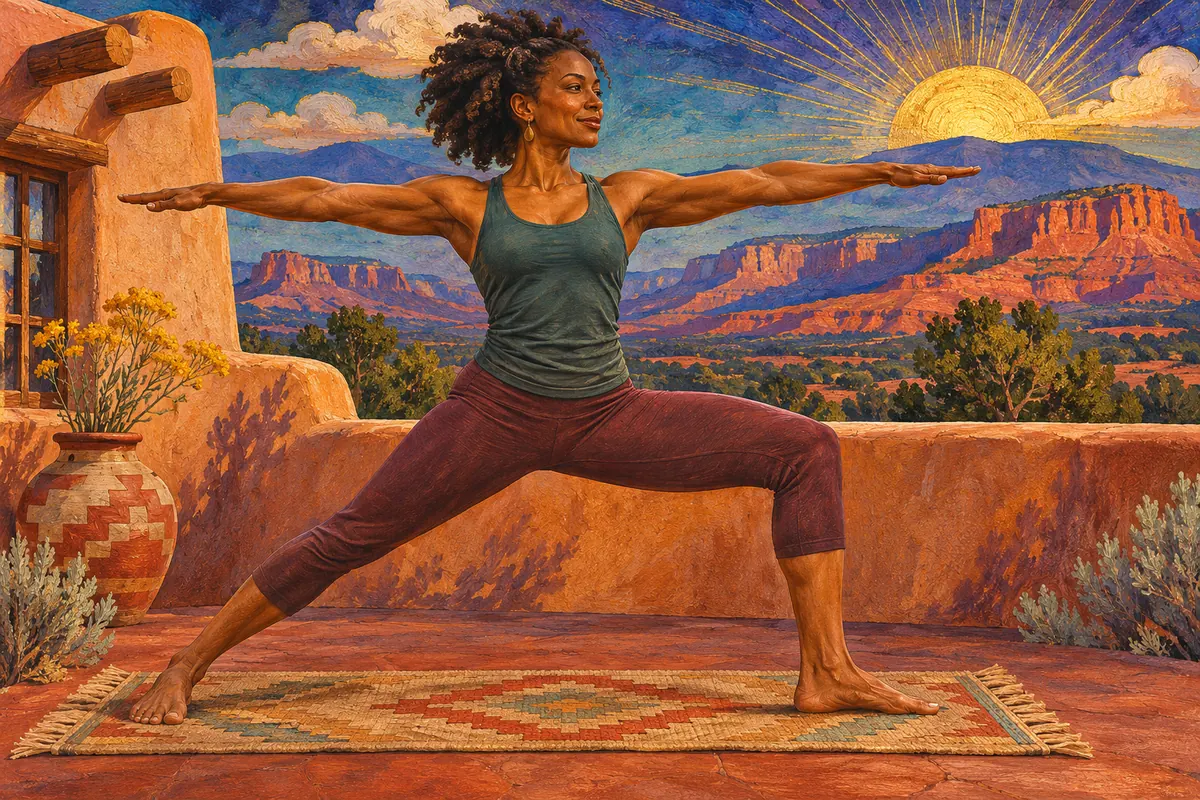
Practice Hatha Vinyasa asana and sequencing, then teach what you have explored. Notice how a change of base, pace, or cue can give the same posture a different feel.
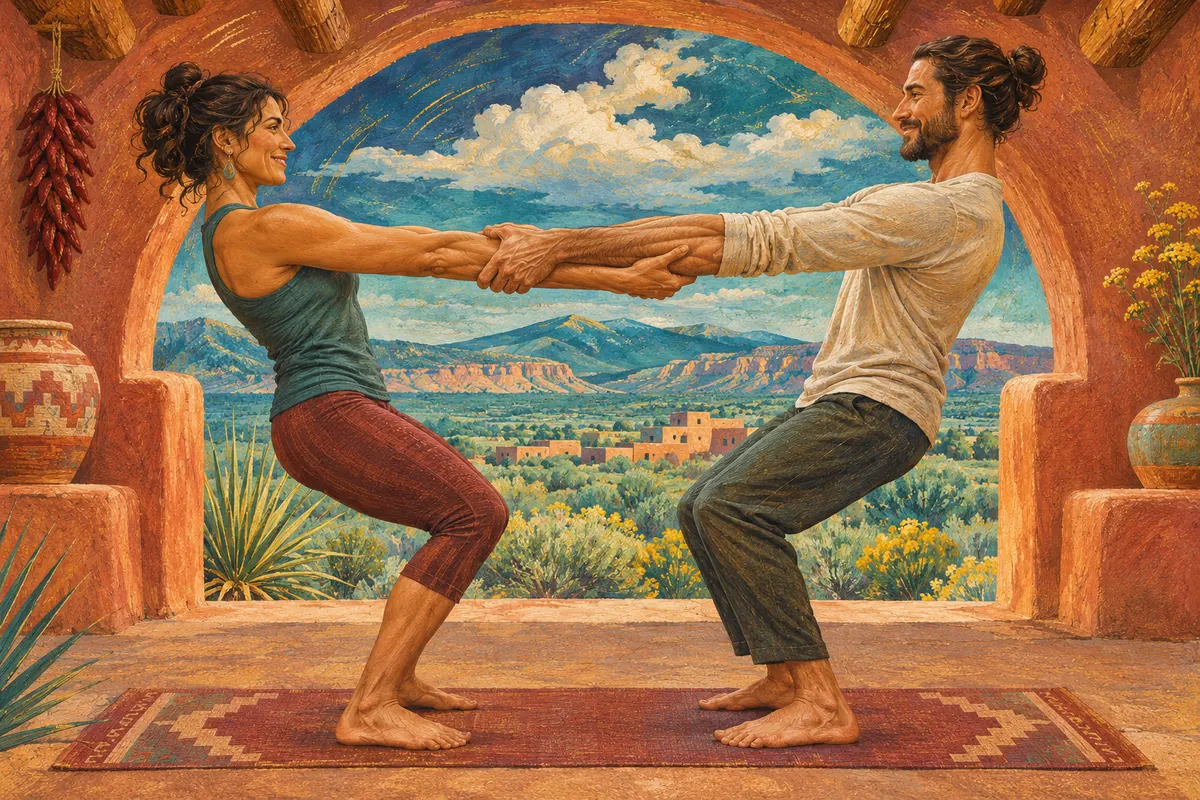
Switch between giving and receiving support. Work with contact, counterbalance, and shared timing. Learn to ask for consent, give specific feedback, and release a hold together.
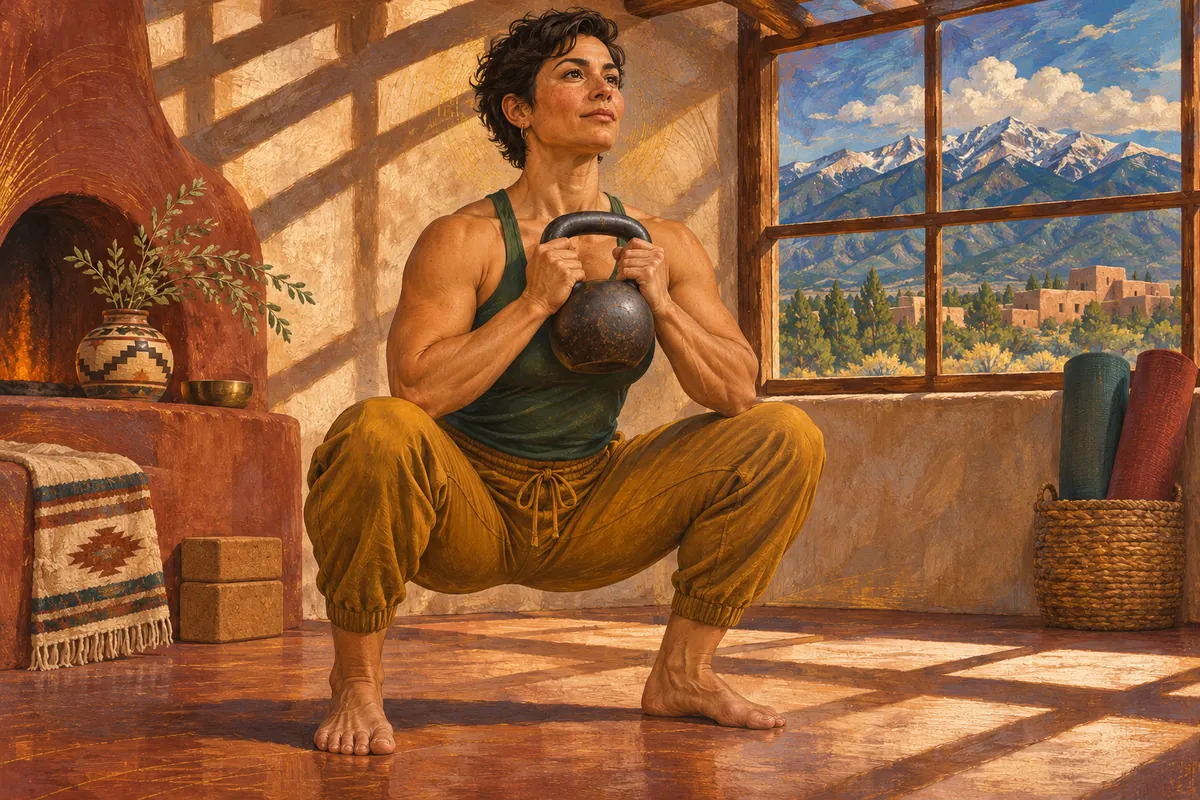
Condition the legs, hips, shoulders, and trunk for kneeling, moving around the mat, and supporting another person. Explore how steady effort and well-placed body weight work together.
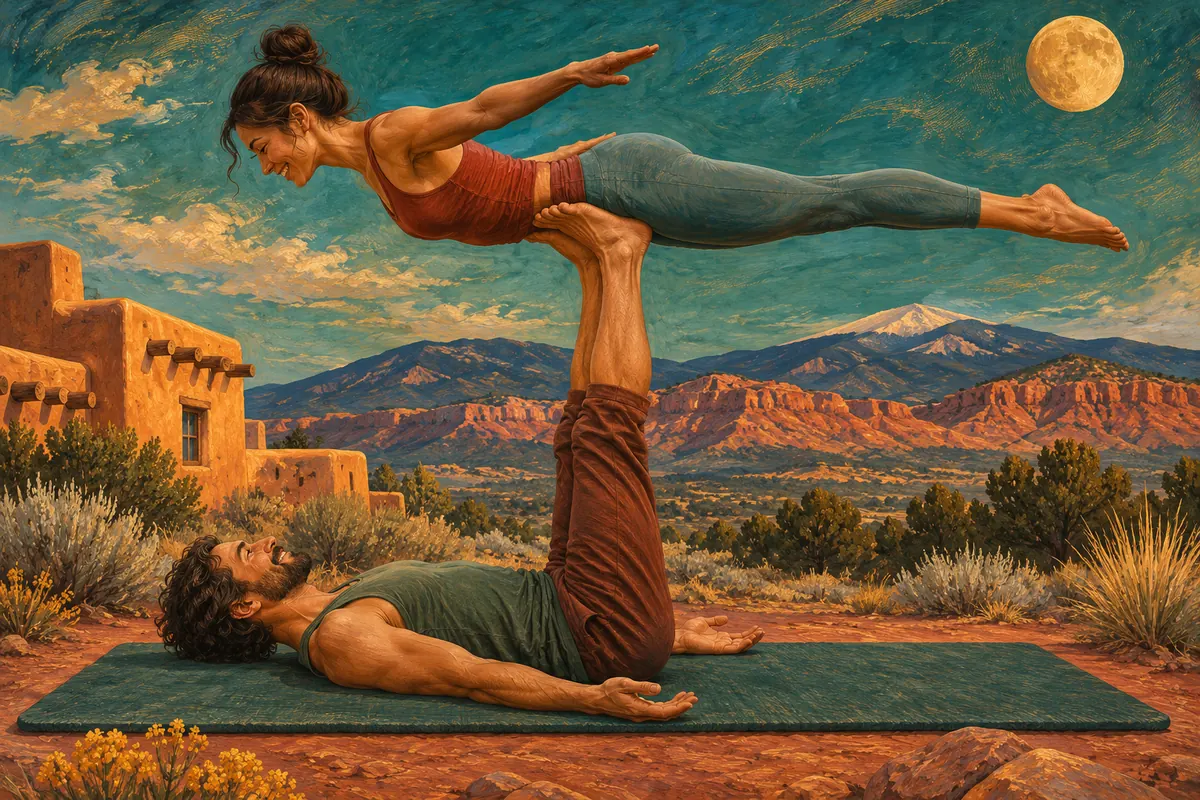
Train as a base, flyer, and spotter. Partner conditioning, balance, supported flight, and clear communication give you a way to build a sequence together and bring it back to the ground.
The Mud to Lotus method
Watch a Thai massage from across the room and you can follow its rhythm. Come closer and you can see the decisions that give the movement its shape.
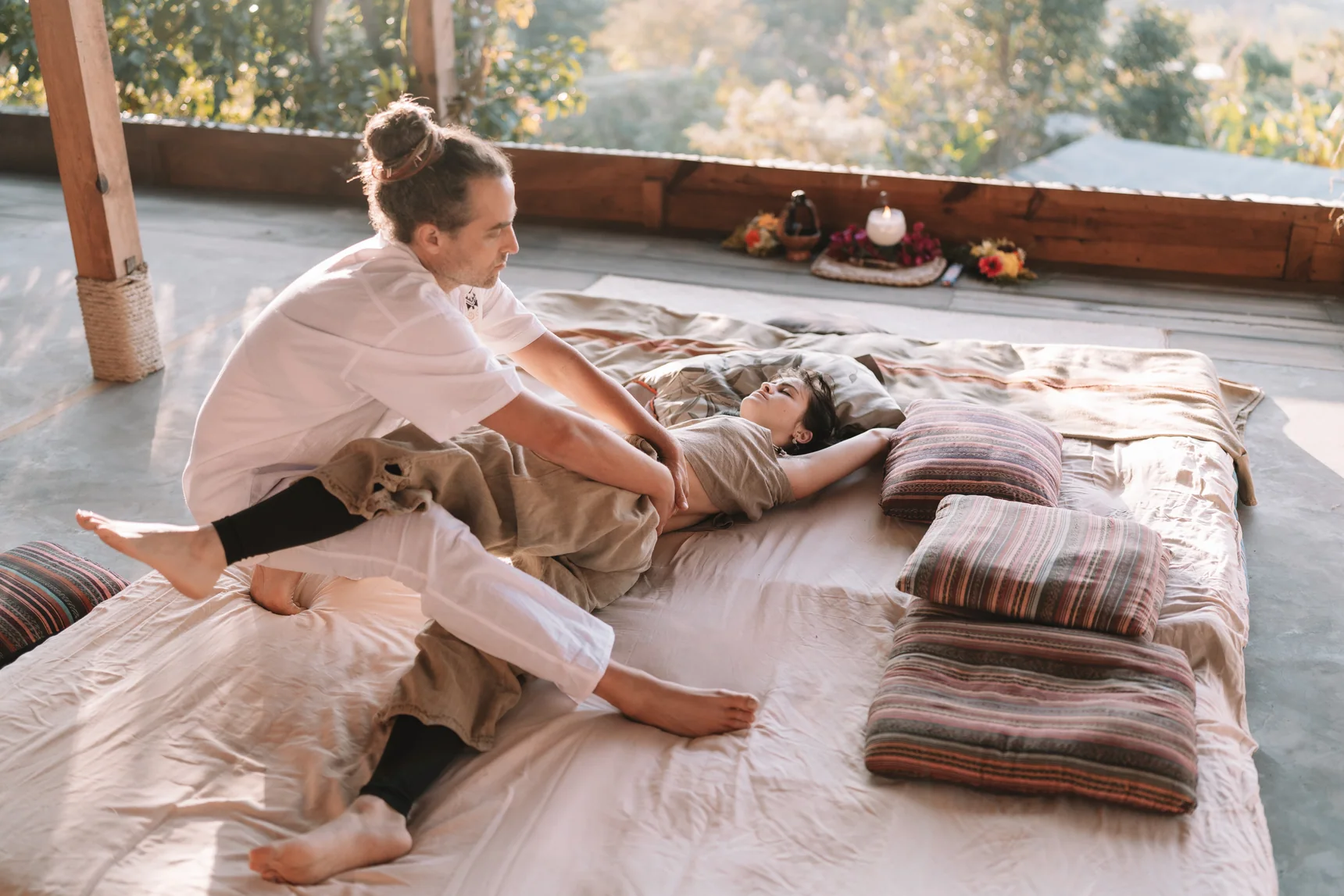
Ahna Ma opens with this question. The answer might change where you sit, which side you begin on, or whether a cushion under the knee makes it easier for someone to rest. Listening continues after your hands meet the body.
On the mat, a partner’s leg can rest across your thigh. Anatomy helps you locate the hip and knee. Mechanics helps you notice what is carrying the weight. A small change in your seat changes the angle of contact. Ask your partner how that change feels.
Yoga teachers know the beat between a cue and a student’s response. In Thai massage, that beat has a place under your hands. Let a movement finish, listen to the person receiving it, and decide together whether to repeat it or move on.
Explore the movement photographs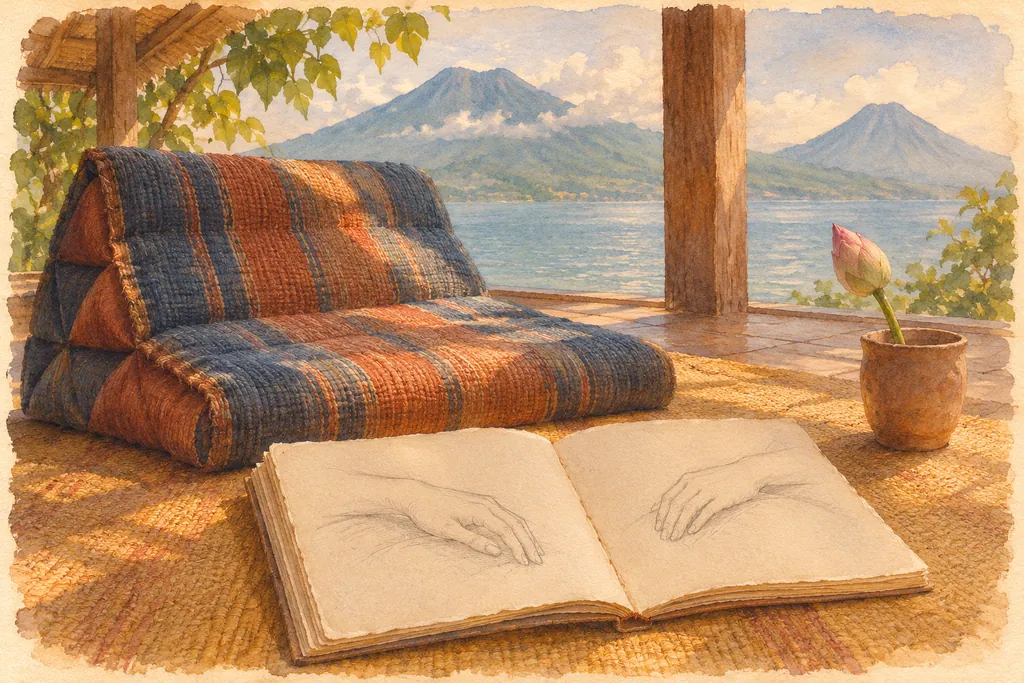
Week by week
Begin with one partner on a mat. By the fifth week, you’re leading public classes and adapting Thai massage sessions for individual clients.
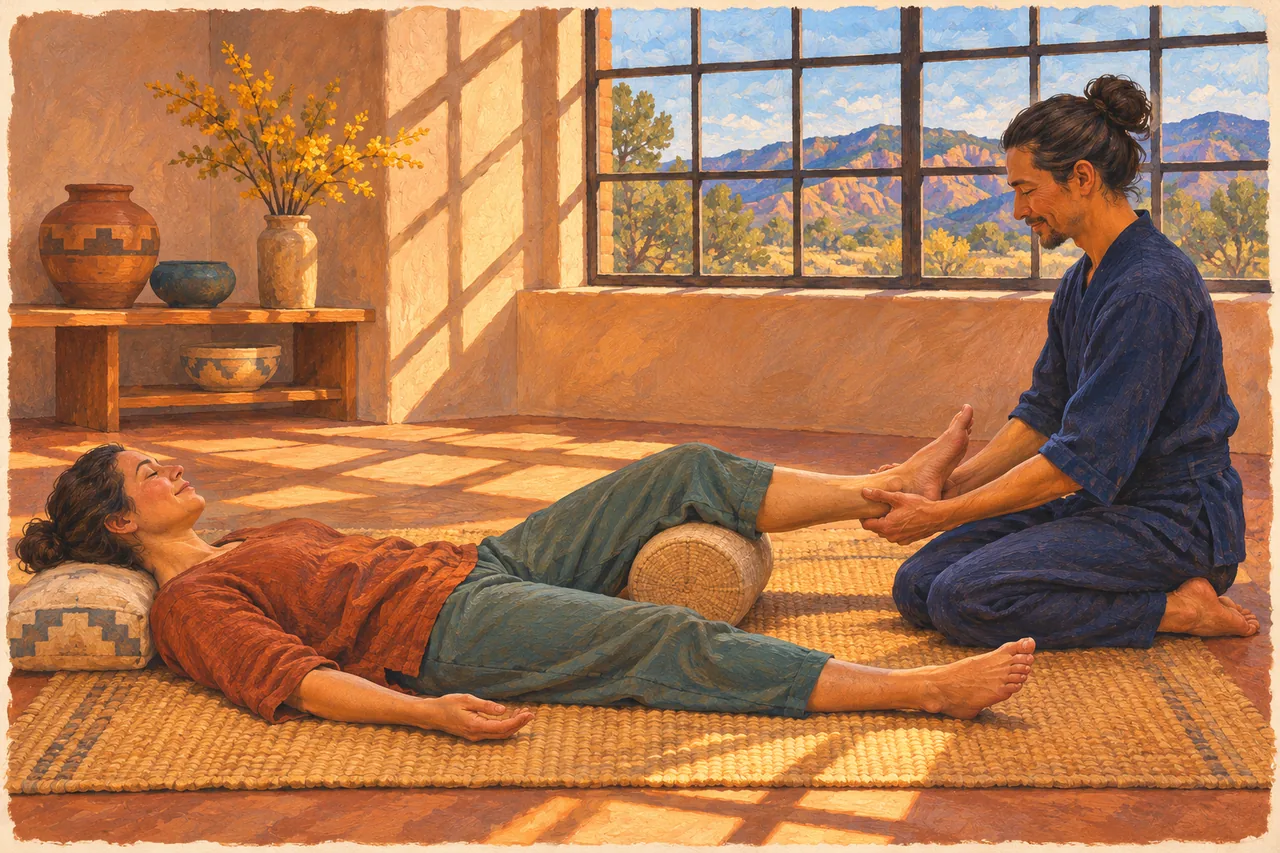
Begin the morning with breath, asana, and AcroYoga. In Thai massage lab, start with a partner lying on their back. Learn to shift your own weight, listen to feedback, and connect one movement to the next.
See week 1 on the calendarPractice with your partner side-lying, face down, and seated. Anatomy and ethics give those choices a purpose as you explore which position feels supportive and how to ask before changing it.
See week 2 on the calendarThe first public student-led classes open this week. Practice giving a clear cue and noticing how the room responds. In the afternoon Thai massage lab, use assessment and partner feedback to adapt a session.
See week 3 on the calendarAdvanced Thai massage lab leads into the first four supervised clinic afternoons, Tuesday through Friday. Meet clients, agree on goals, adapt your work, and document what you observe. Public morning classes continue.
See week 4 on the calendarLead the final public class on Monday, then bring anatomy, ethics, and advanced sequencing into the last four clinic afternoons. The intensive closes Friday in the clinic, working with the people you came here to serve.
See week 5 on the calendarSummer 2027 calendar
June 28–July 30. Classes run Monday through Friday, 8 a.m.–5 p.m. Choose a week and a day to see each class and clinic. All times are local to Santa Fe.
40 instructional hours each week. Classes meet Monday, July 5. Public clinic runs 1–5 p.m. on July 20–23 and 27–30.
Download the full calendar (.ics)Curriculum
Four stages of Thai manual therapy anchor a 200-hour course of study. Each course below links to its outline in the Bright Moon catalog.
Consent, scope of practice and the teacher–practitioner relationship
Historical roots and ideas that inform Thai bodywork
Prepare and lead public classes with instructor feedback
Supervised client sessions in the public clinic
Supervised public clinic
In the final two weeks, members of the Santa Fe community come to Bright Moon for Thai massage. Once your instructor confirms you’re ready, you welcome a client, listen to what brings them in, and lead the session yourself. Your mentor observes from a distance and is available when you need another perspective.
For a yoga teacher moving into therapeutic bodywork, this is where a familiar sequence becomes a series of choices. If a client feels uncomfortable lying on their back, what else could you offer? You have time to ask, adapt, and talk through your reasoning with someone who saw the work.
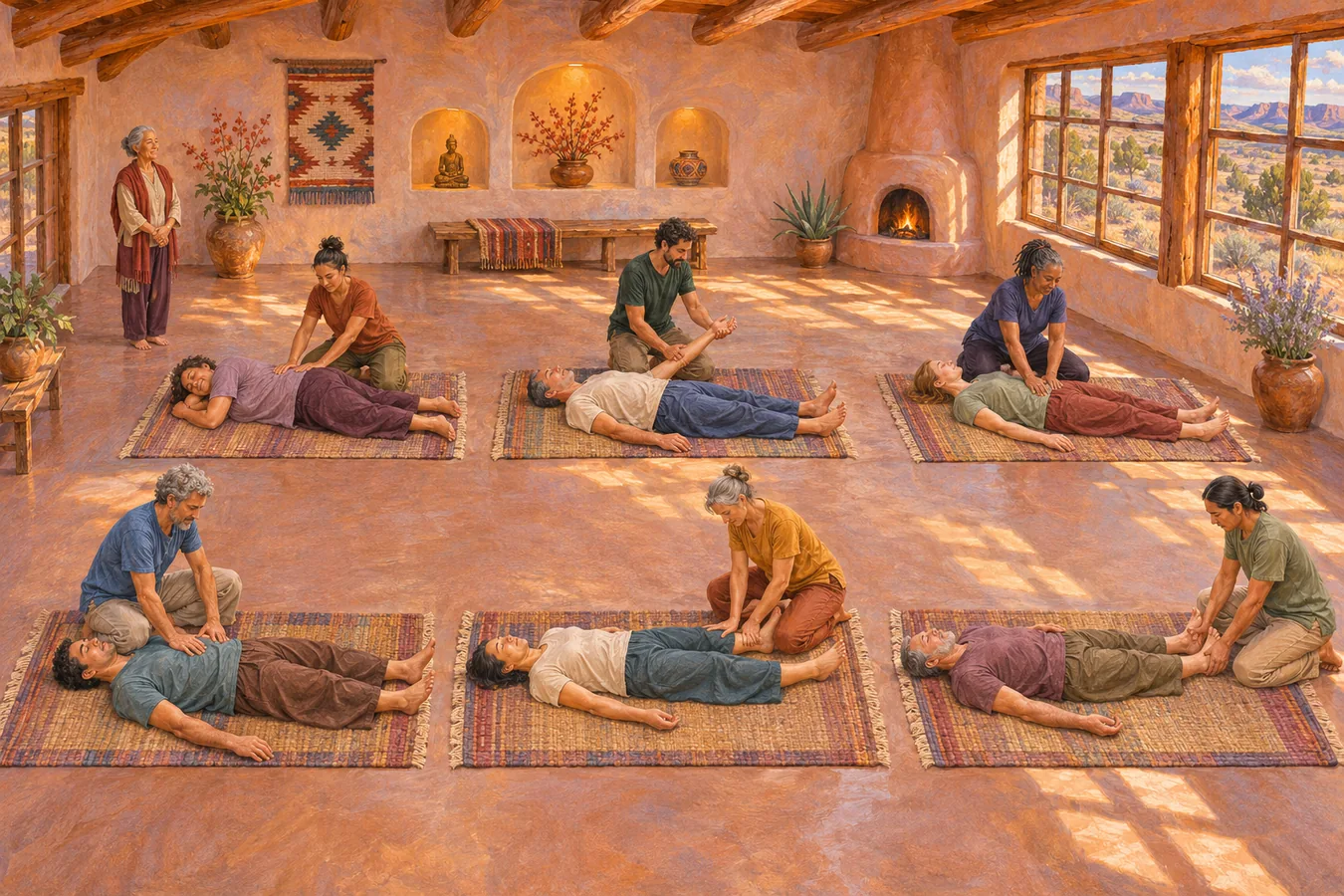
Ask what the client hopes to get out of the visit. Discuss comfort, boundaries, and consent. If you’re unsure where to begin, bring that question to your instructor as you plan the session.
Work on a floor mat with the client fully clothed. Check how the pressure feels and whether a different position or an extra bolster would help. Your mentor can observe your body mechanics and the way you respond.
Record what the client reported, what you observed, and how you adapted in your SOAP notes. Review a specific decision with your instructor and take one piece of feedback into your next clinic shift.
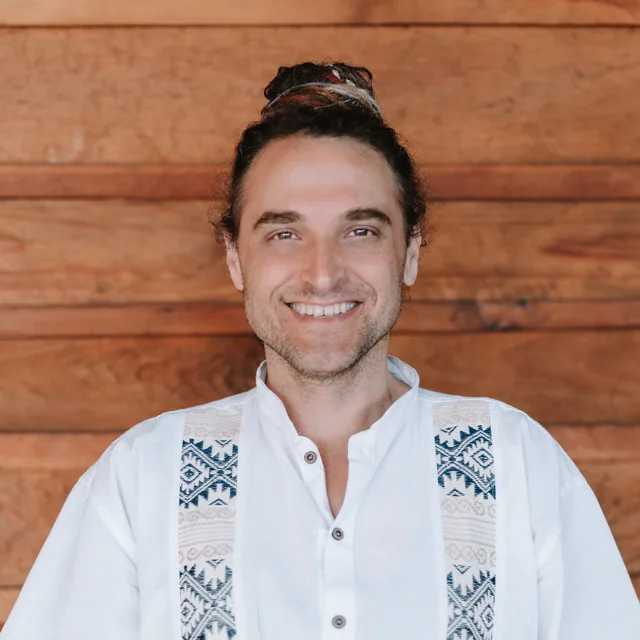
Founder & lead teacher
Ahna Ma has practiced Thai massage since 2006 and AcroYoga since 2010. Ahna Ma trained in OsteoThai in Laos and studied Thai bodywork at the Naga Center. In Santa Fe, Ahna Ma directs The Bright Moon Institute and its community clinic.
“How are you feeling in your body today?”
That is the first question in the Mud to Lotus method. The answer helps shape where you place your hands, how much weight you offer, and when you pause.
Read Ahna Ma’s faculty biographyPhotographic gallery
Twenty photographs from Ahna Ma’s practice archive. Begin in the lakeside pavilion, follow the lines of a body in motion, then look closely at the hands.
The school · Santa Fe, New Mexico
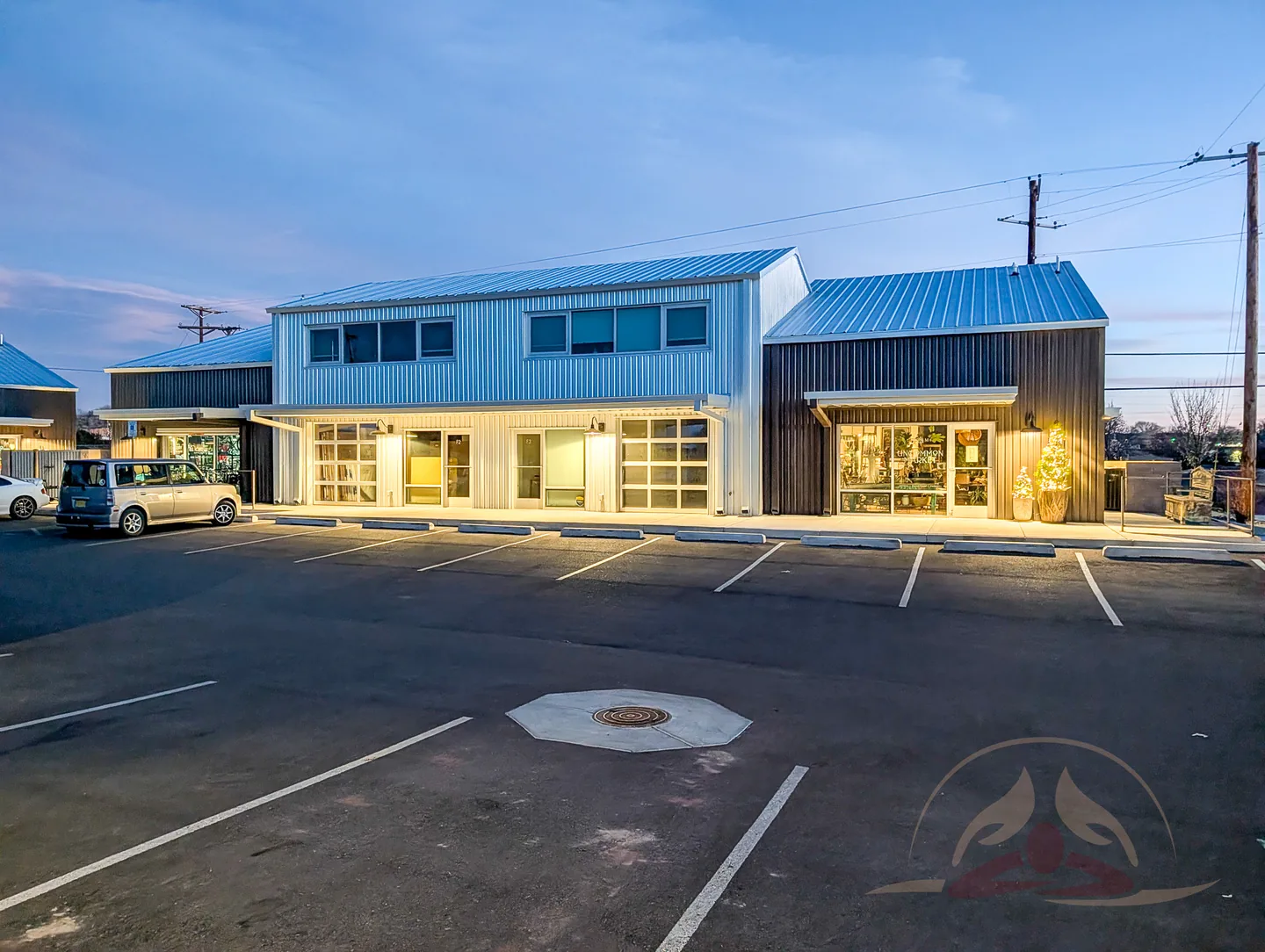
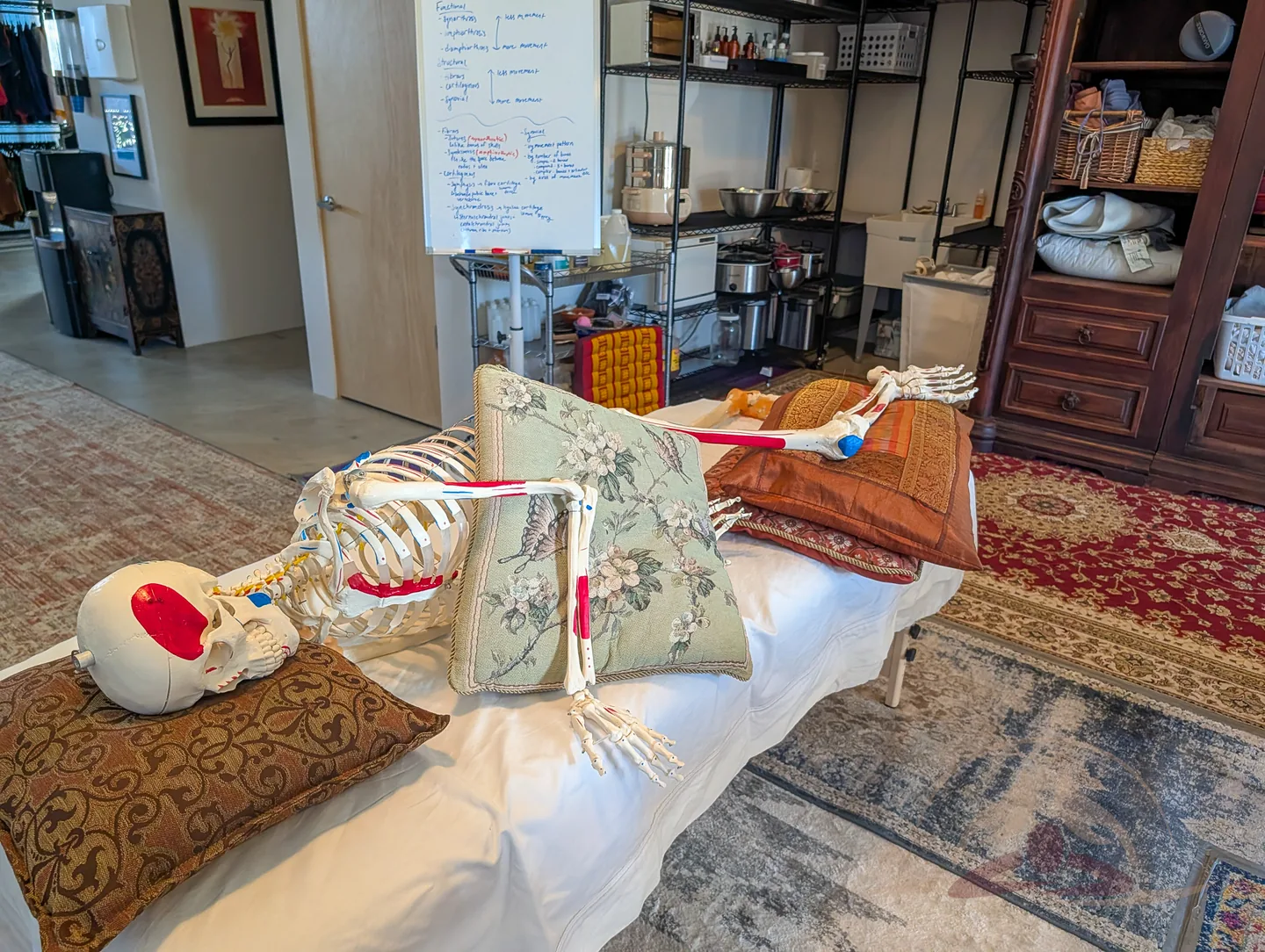
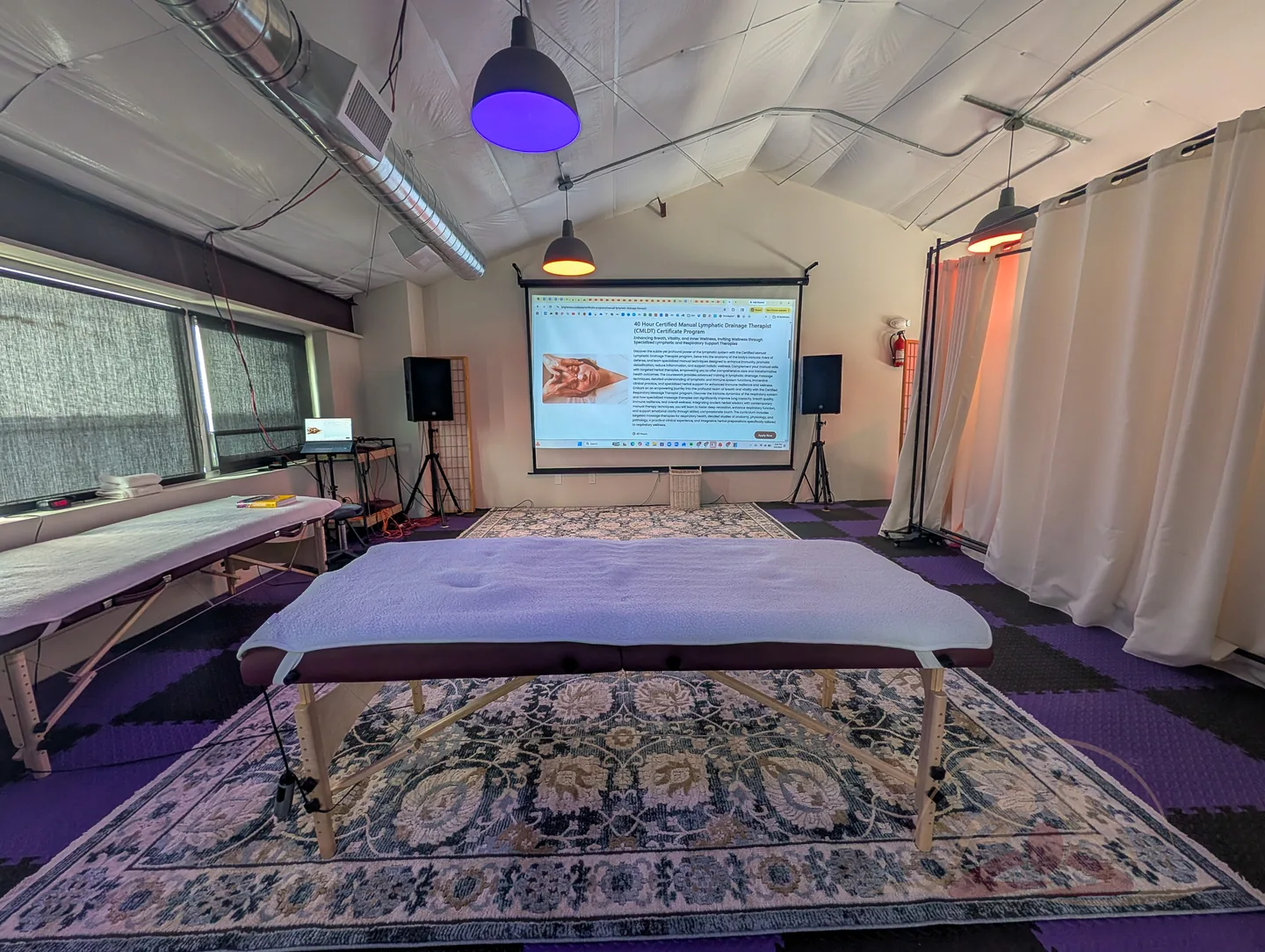
In Santa Fe’s industrial arts district, The Bright Moon Institute is where you’ll spend your five weeks. Floor mats and bolsters make room for partner practice. In the classroom, a side-lying skeleton lets you see the same anatomy you’re learning to feel with your hands.
The Bright Moon Institute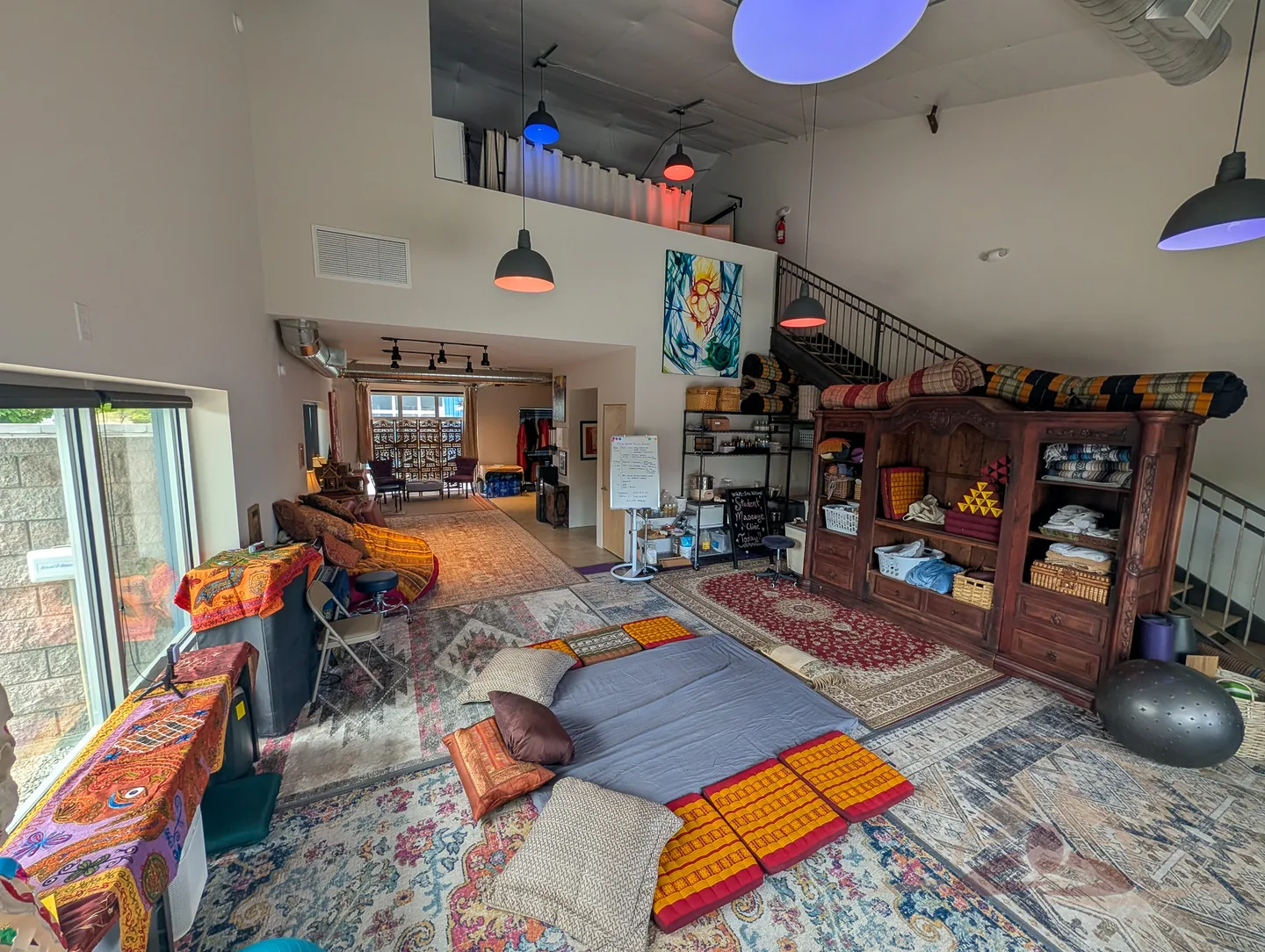
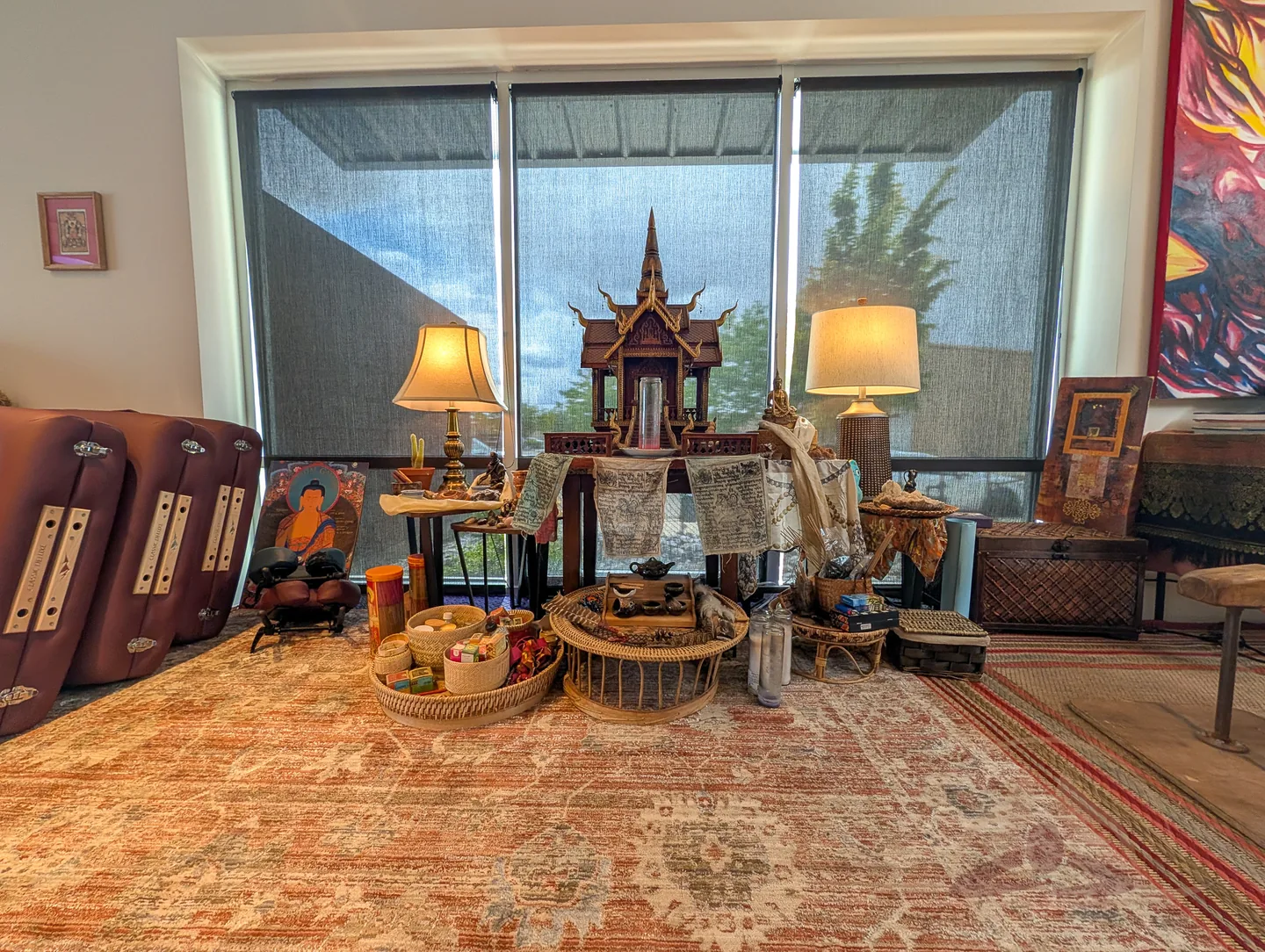
Summer in Santa Fe

Class ends at 5. Catch an outdoor concert on the Plaza, wander the galleries before supper, or spend Saturday morning at the Railyard Farmers’ Market. Evenings and weekends are yours throughout the intensive.
On Friday, July 2, Santa Fe Opera opens Turandot at 8:30 p.m. The following weekend, July 10–11, meet artists at the International Folk Art Market in Railyard Park.
Summer 2027 admissions
June 28–July 30, 2027 · $3,600 tuition
200 hours at The Bright Moon Institute
Yoga teachers, massage therapists, and movement practitioners are welcome to apply. Applicants must be at least 18, have a high school diploma or equivalent, and complete an admissions interview.
Practice giving a complete Thai massage session under supervision. Build a wider vocabulary for teaching movement, spotting a partner, coaching strength, and working with consent. You’ll spend time as both teacher and receiver.
The school awards the Thai massage certificate on completion. The yoga training fulfills the education component for the Yoga Alliance RYT 200 pathway. Graduates who wish to register individually apply to Yoga Alliance. Professional massage licensure has its own state requirements.
Yes. Bright Moon enrolls you in its massage therapy certificate program and records your completed course hours on an official transcript. Use the school’s Parchment transcript service to send it to the board reviewing your education.
Classes begin Monday, June 28, and finish Friday, July 30, 2027. Classes run Monday through Friday, 8 a.m.–5 p.m. Plan for 40 hours per week at The Bright Moon Institute, 1189 Parkway Drive, Unit G1, Santa Fe, New Mexico. See the daily schedule.
Use the Bright Moon Institute application. The Mud to Lotus certificate program is preselected. Choose the June 28–July 30, 2027 term, and follow the admissions steps. You can also contact the school at [email protected] or 505-221-6303.
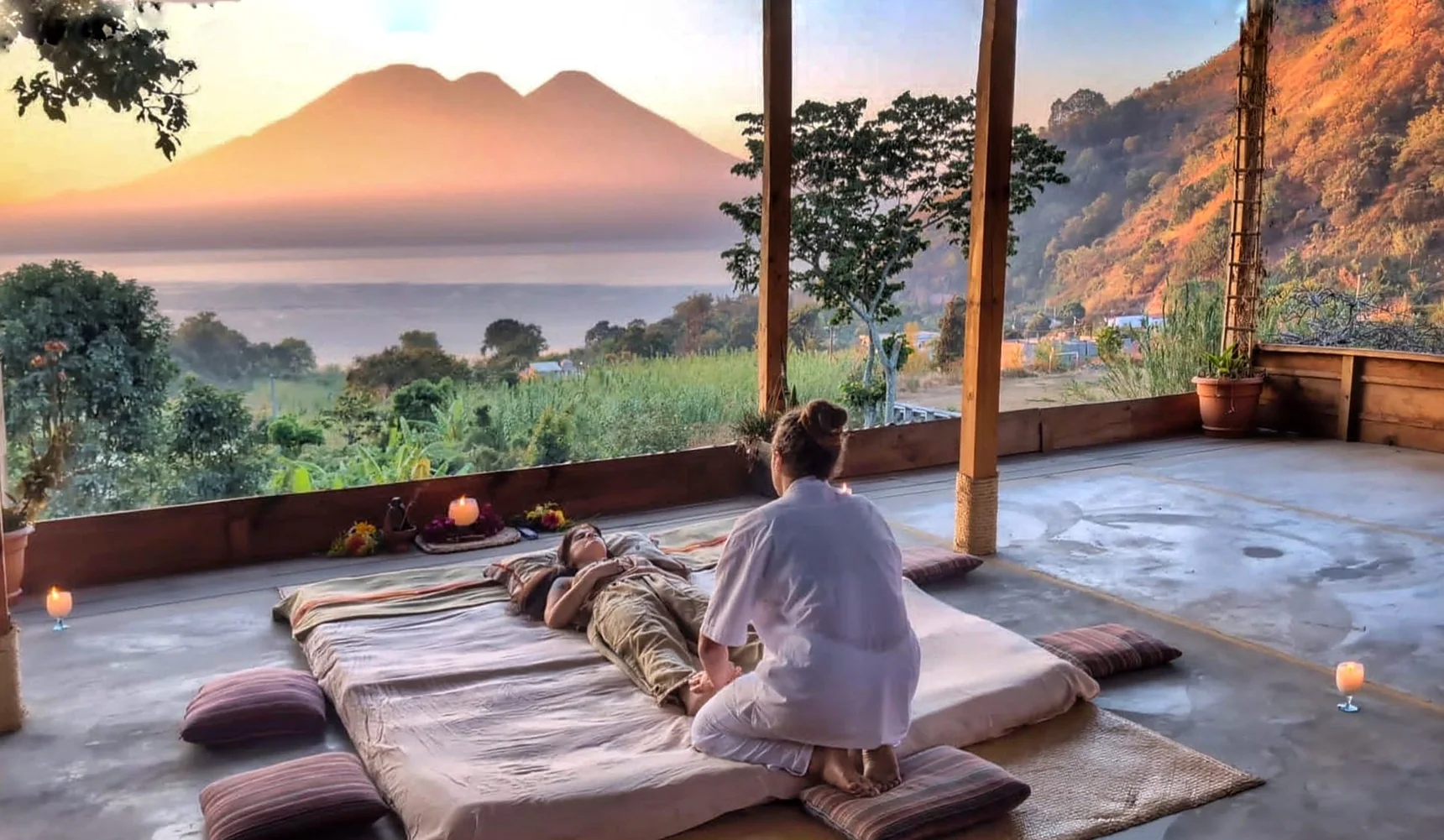 Evening above the lake
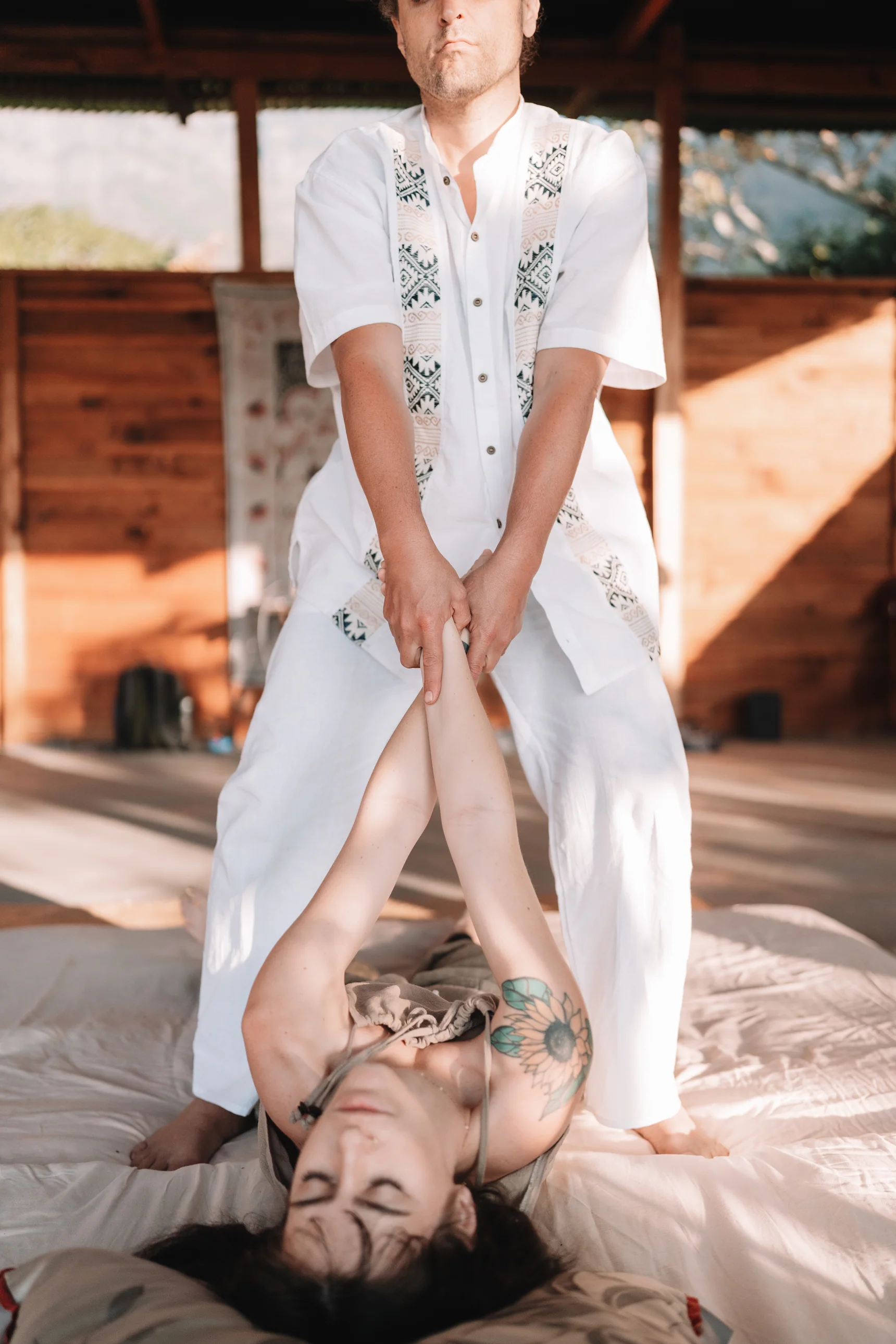 Two long lines
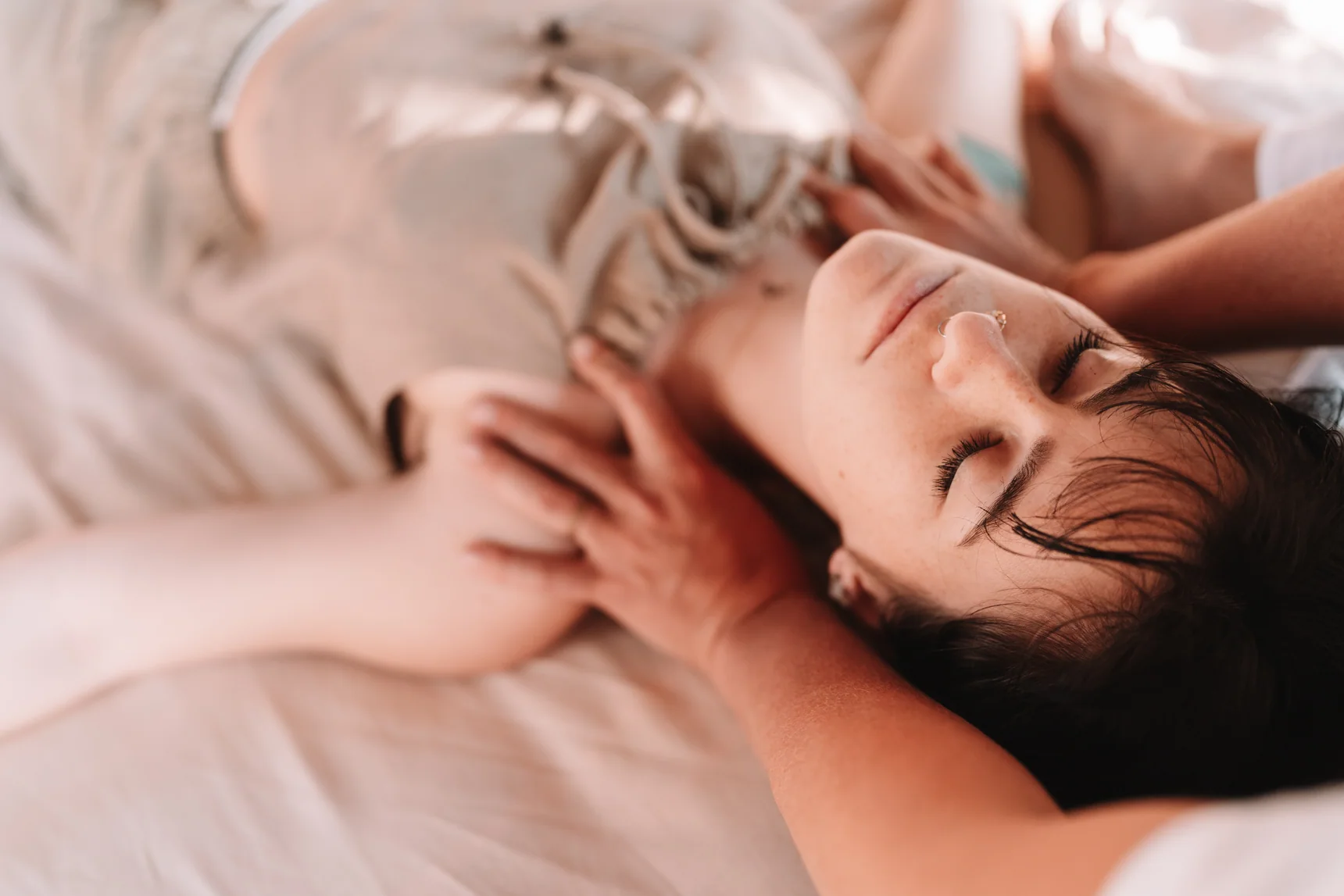 A quiet close